
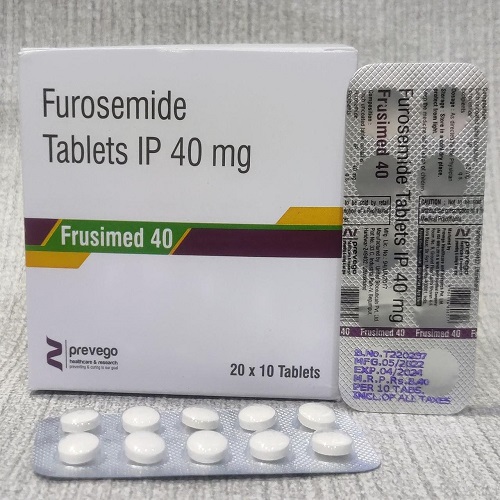
Description
Furosemide 40 mg
Furosemide 40mg is a medication commonly to treat various conditions related to excess fluid buildup in the body. It belongs to a class of drugs called loop diuretics, which work by causing the kidneys to remove excess salt and water from the body through increased urine production.
Here are some common uses of Furosemide 40mg:
- Edema: Furosemide often prescribed to treat edema, which is the accumulation of fluid in the body’s tissues. This can occur due to conditions such as congestive heart failure, liver disease, kidney disorders, or certain medications.
- Hypertension: Furosemide may be to help lower blood pressure in people with hypertension (high blood pressure). By reducing fluid volume in the body, it can help decrease blood pressure levels.
- Congestive Heart Failure: Furosemide frequently used as part of the treatment for congestive heart failure (CHF). CHF is a condition where the heart is unable to pump blood effectively, leading to fluid buildup in the lungs and other parts of the body. Furosemide helps reduce this fluid buildup, relieving symptoms such as shortness of breath and swelling.
Uses
Furosemide is a medication primarily to treat conditions characterized by excess fluid retention in the body, also known as edema. Here are its main uses:
- Edema: Furosemide commonly prescribed to reduce excess fluid accumulation in various conditions, including:
- Congestive heart failure (CHF): Furosemide helps alleviate symptoms such as swelling (edema) in the legs, ankles, and lungs by promoting the excretion of excess fluid.
- Liver cirrhosis: Furosemide may be to manage edema associated with liver cirrhosis, a condition where scarring of the liver leads to fluid buildup in the abdomen (ascites) and legs.
- Kidney disorders: Furosemide is often to treat edema caused by kidney diseases, such as nephrotic syndrome or acute kidney injury, by increasing urine production and eliminating excess fluid.
Dosage
The dosage of Furosemide can vary depending on the individual’s medical condition, response to treatment, and other factors. It’s crucial to follow the dosage instructions provided by a healthcare professional. Here are typical dosages for some common conditions:
- Edema:
- For adults with edema due to congestive heart failure or liver cirrhosis, the initial dose is usually 20 to 80 mg orally once or twice daily.
- For edema associated with kidney disorders, the initial dose may be higher, up to 80 mg orally once or twice daily.
- Dosages may beadjusted based on the individual’s response, but the maximum recommended daily dose for edema is typically 600 mg.
Conclusion
In conclusion, Furosemide is a medication commonly to treat conditions involving excess fluid retention in the body, such as edema associated with congestive heart failure, liver cirrhosis, kidney disorders, and hypertension. It works by promoting diuresis, or increased urine production, leading to the removal of excess fluid and reducing swelling.
essential to follow the prescribed dosage instructions provided by a healthcare professional and to avoid exceeding the recommended dose.




Vernon –
Think everyone should know about this, it’s just beyond my expectations
Rocky –
Just love the design and the customer support is the nicest.
Jayce –
I think this is amazing. Lots of features and customizable from every point of view. The few times I asked for help in support they were competent, fast and above all very patient. Really recommend
Maddison –
Think everyone should know about this, it’s just beyond my expectations
Oma –
Good response from the support.
Phyllis –
I like this item and also the customer service of them.
Hoyt –
Quite easy to use, nice design, surely will buy again
Robert –
Been using it for a while, I usually don’t write a review but this time I am truly convinced to write.
Melyna –
The first time I got the urges to leave a comment, but this is simply a top-notch thing you can find.
Christelle –
Thank you guys for this amazing creation! Absolutely mind-blowing!